Attendance/Duration
Full-time, one yearOverview
Aerospace is a high profile industry which focuses on the design and manufacture of a wide range of aircraft, systems and equipment. It also involves the maintenance and repair of aircraft products. Aerospace offers superb career opportunities for those who are technical, practical and genuinely fascinated by flight. It is a key sector within the Ayrshire economy and we work very closely with local employers, ensuring our courses offer the skills and training they look for in employees. If you'd like to work in aircraft engineering, this course could start you off on a great career.
Entry Requirements
To join this exciting course, you'll need:
- a genuine passion for aircraft and aviation
- two relevant Highers, preferably in Mathematics and Physics, plus National 5 in English
- satisfactory completion of a relevant NC course at SCQF Level 6 or equivalent
- an interview with us
If you don't have formal qualifications but have life experience, then we'll also consider you for a place, so please do apply.
Course Content
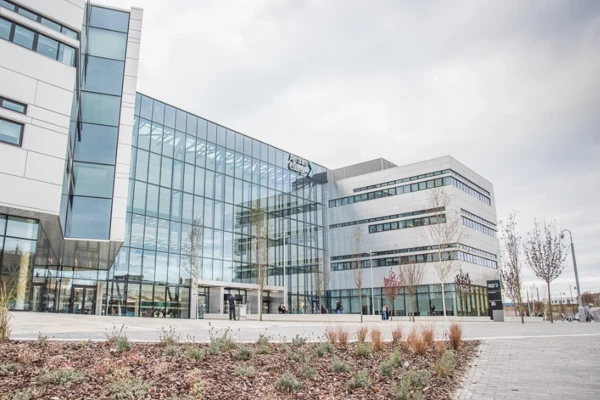
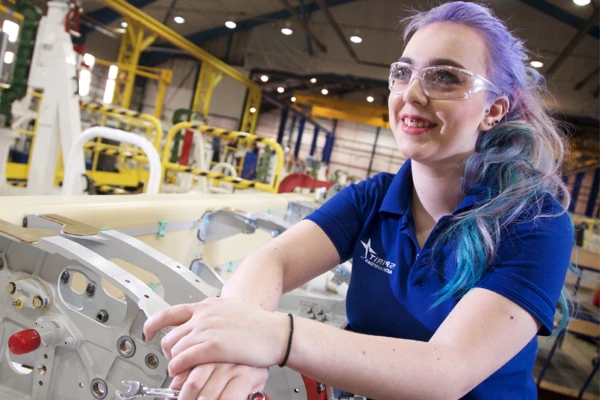
Dive into the intricacies of aircraft systems and flight processes through a mix of theory and hands-on experience. Learning in our state-of-the-art Aeronautical Engineering Training Centre, taught by industry experts, you may:
- Explore modern aircraft construction, materials, and major component construction methods investigate aerodynamics, flight mechanics, and the layout of different aircraft types.
- Delve into aircraft propulsion systems, focusing on piston and gas turbine engines.
- Learn about pneumatic and hydraulic power within common aircraft systems.
- Study aircraft avionic systems, covering radio communications, radar, navigation, and automatic flight control explore physics for aviation, solving engineering problems in solid mechanics, thermofluids, wave motion, and mechanical vibration focus on human factors and their impact on performance in an aircraft engineering environment.
- Learn about aircraft electrical and electronic principles, covering operational amplifiers, combinational logic and DC network.
You will also have the opportunity to develop proficiency in the industry-standard CATIA V5 design package.
Careers and Further Study
After successfully completing this course, you may have the opportunity to:
- launch your career in aeronautical engineering with a Modern Apprenticeship or roles like Trainee Mechanic or B1/B2 Licensed Engineer
- articulate on to the MEng (Hons)/BEng (Hons) in Aircraft Engineering at the University of the West of Scotland